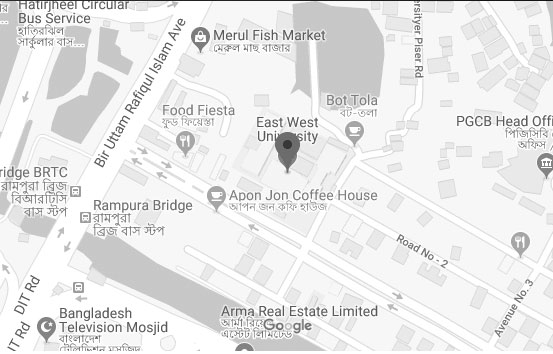
A/2, Jahurul Islam Avenue
Jahurul Islam City, Aftabnagar
Dhaka-1212, Bangladesh
1. Doctor of Philosophy in Engineering, Department of Civil Engineering, Monash University, Australia.
2. Master of Science in Engineering , National University of Ireland Galway.
3. Bachelor of Science in Civil Engineering, Khulna University of Engineering and Technology (KUET).
Name of employer: Western Sydney University, Sydney, Australia
Position: Professor
Period of employment: 06.2002- continuing
Name of employer: School of Civil Engineering
Queensland University of Technology, Brisbane, Australia
Period of employment: 03.2000 – 05.2002
Position: Research Fellow
Name of employer: Water and Catchment Management Group, Sinclair Knight Merz, Melbourne, Australia
Period of employment: 04.1999 – 03.2000
Position: Project Engineer/Statistical Hydrologist
Name of employer: CRC for Catchment Hydrology, Monash University, Australia
Period of employment: 04.1997 – 04.1999
Position: Research Fellow
Name of employer: The University of Melbourne, Australia
Period of employment: 01.1997 – 03.1997
Position: Research Fellow
Name of employer: Monash University, Australia
Period of employment: 07.1993 – 12.1996
Position: PhD Scholar and Tutor
Name of employer: Bangladesh Water Development Board, Bangladesh
Period of employment: 01.1984 – 12.1992
Position: Assistant Engineer and Sub-Divisional Engineer, Teesta Barrage Project, Doani, Rangpur; Sub-divisional Engineer, Morphology Division, Mymensingh, Bangladesh
Name of employer: Dhaka University of Engineering and Technology (DUET), Gazipur, Bangladesh
Period of employment: 01.1983 – 01.1984
Position: Lecturer in Civil Engineering
1. Rahman, A., Ouarda, T. B., Rahman, M. M., Hagare, D., & Siddiqui, Z. (Eds.). (2026). 4th International Conference on Water and Environmental Engineering: Proceedings of iCWEE 2025. Springer Nature.
2. Rahman, M.M., Tan, E.L., Rahman, A. (2024). Proceedings of the 3rd International Conference on Advancements in Engineering Education (iCAEED-2024), Sydney, Australia, published by Science Technology and Management Crescent Australia Limited, ISBN 978-1-7636843-3-1, 291 pp.
3. Rahman, M.M., Rahman, A., Ouarda, T.B.M.J. (2022). Proceedings of the 3rd International Conference on Water and Environmental Engineering (iCWEE-2022), 27-30, November 2022, Sydney, Australia, published by Science Technology and Management Crescent Australia Limited, ISBN: 978-0-6456692-0-6. 224 pp.
4. Rahman, A., Ilic, V. (2019). Blended Learning in Engineering Education: Recent Developments in Curriculum, Assessment and Practice, eds. Rahman and Ilic, CRC Press, 322 pp.
5. Tan, E.L., Singh, B., Shrestha, S., Zhang, S., Mirza, O., Xiang, Y., Rahman, A. (2019). Proceedings of the 2nd International Conference on Advancements in Engineering Education (iCAEED-2019), edited by Tan et al., 24-28 Nov 2019, Sydney, Australia, ISBN: 978-0-6482681-7-8, 173 pp.
6. Rahman, M. M., Rahman, A., Badruzzaman, A. B. M., Ouarda, T. B. M. J. (2019). Proceedings of the 2nd International Conference on Water and Environmental Engineering (iCWEE-2019), eds. Rahman et al., 19-22 Jan 2019, Dhaka, Bangladesh, ISBN: 978-0-6482681-1-6.
7. Islam, R., Noor, S., Bashar, R., Khan, H.M., Jakariya, M., Rahman, A., Amos, C. (2019). Proceedings of the 1st International Conference on Sustainability in the Natural and Built Environment (iCSNBE-2019), eds. Islam et al., 19-22 Jan 2019, Dhaka, Bangladesh, ISBN: 978-0-6482681-4-7, 273 pp.
8. Leo, C., Rahman, A., Islam, M. M., Begum, M. (2019). Proceedings of the 2nd International Conference on Engineering Research and Practice (iCERP2019), eds. Leo et al., 19-22 Jan 2019, Dhaka, Bangladesh, ISBN: 978-0-6482681-3-0, 157 pp.
9. Rahman, A. (2018). Rainwater Harvesting: Quantity, Quality, Economics and State Regulations, edited by Rahman, A., MDPI, Basel, Switzerland; ISBN: 978-3-03842-714-8, 168 pp.
10. Rahman, A., Hassan, M.K., Ilic, V., Leo, C. (2018). Proceedings of the 1st International Conference on Advancements in Engineering Education (iCAEED-2018), edited by Rahman et al., 03-06 December 2018, Sydney, Australia http://www.icaeed.net.au/, ISBN: 978-0-6480147-9-9, 252pp.
11. Rahman A., Rahman, M.M, Rahman, M.A., Ouarda, TBMJ (2018). Proceedings of the 1st International Conference on Water and Environmental Engineering (iCWEE2017), edited by Rahman et al., 20-22 Nov 2017, Sydney, Australia, ISBN: 978-0-6480147-4-4, 158 pp.
12. Rahman, A., Mashiri, F., Rahman, M.M., Karim, R. (2017). Proceedings of 1st International Conference on Engineering Research and Practice, edited by Rahman et al., 4 - 5 February 2017, Dhaka, Bangladesh, Published by Science, Technology and Management Crest Australia; ISBN: 978-0-6480147-0-6; http://www.gcstmr.com.au/proceedings/icerp/2017/Proceedings-iCERP2017_March%2017,%202017.pdf, 153pp.
13. Rahman, A., Ilic, V. (2016). Proceedings of International Conference on Engineering Education and Research, edited by Rahman, A and Ilic, V., 21-24 November 2016, Western Sydney University, Parramatta Campus, Sydney, Australia, Published by Western Sydney University, Australia, ISBN: 978-0-646-95724-1; https://www.westernsydney.edu.au/__data/assets/pdf_file/0005/1176746/iCEER2016_Conference_Proceedings_official.pdf, 508pp.
14. Rahman, A., KeeKrautz, C., Kader, F., Brown, R., Williamson, I., and Marshall, R. (2003). A study on natural channels as a component of Water Sensitive Urban Design. University of Western Sydney, 134pp. ISBN 1 74108 029 0.
1. Mummidivarapu, S.K., Shaik, R., Sowmya, C.S., Rahman, A. (2026). Evaluation and Validation of Potentiality of Rainwater Harvesting for Urban Environments using Remote Sensing Techniques and GIS Mapping, Water, 18(9), 1014.
2. Rima, L., Haddad, K., Rahman, A. (2026). Regionalisation of Generalised Extreme Value Distribution in Regional Flood Frequency Analysis: A Case Study for South-east Australia, Water, 18, 1492.
3. Dalrymple, B., Wicks, M., Jones, W., Allingham, B., Rahman, A., Lenhart, J. (2026). Stormwater solids and nutrient removal in a radial flow cartridge system: Field evaluation of a new innovation in stormwater treatment, Water e-journal, Australian Water Association, doi.org/10.21139/wej.2026.003.
4. Afrin, N., Rahman, A., Mim, S.T., Sharafati, A., Ahamed, F. (2026). Uncertainty analysis for AI-based regional flood methods in Australia, Hydrological Sciences Journal, 1-17.
5. Pan, X., Yildirim, G., Rahman, A., Haddad, K., & Ouarda, T. B. (2026). Regression-based regional flood estimation using GAM and MARS within a peaks-over-threshold framework. Hydrological Sciences Journal, 1-22.
6. Islam, M.R., Yildirim, G., Rahman, A., Kamal, M.S. (2026). Artificial Intelligence in Cybersecurity and Education: A Bibliometric Review of Emerging Trends and Research Frontiers, Sustainable Futures, 11, 101807.
7. Pan, X., Yildirim, G., Rahman, A. (2026). Peaks-Over-Threshold Based Regional Flood Frequency Analysis Models based on Ordinary Kriging: A Case Study for Eastern Australia, Stochastic Environmental Research and Risk Assessment, (2026) 40:32.
8. Rahman, M.M., Khan, Z., Mitra, B., Abu Shoaib, S., Karim, F., Rushd, S., Al-Ismaeel, Rahman, A. (2026). Predicting the settling velocity of solid particles using machine learning, International Journal of Chemical Reactor Engineering (In press).
9. Pan, X., Yildirim, G., Rahman, A., Ouarda, T. B.M.J. (2026). Regional flood frequency analysis using generalized additive models, random forest, and extreme gradient boosting for South-East Australia, Environmental Earth Sciences, (2026) 85:67.
10. Haddad, K., and Rahman, A. (2026). Probabilistic Wind Speed Forecasting under At-Site and Regional Frameworks: A Comparative Evaluation of Bayesian Additive Regression Trees, Gaussian Process Regression, and Quantile Random Forests, Climate, 14(1), 21.
11. Ahmed, A., Morshed, M. A., Mim, S. T., Rafi, R. S., Khan, Z., Maity, R., & Rahman, A. (2025). Impacts of the Degree of Heterogeneity on Design Flood Estimates: Region of Influence vs. Fixed Region Approaches. Water, 17(18), 2765.
12. Hossain, A. S.M.H., Mim, S.T., Alim, M.A., Rahman, A. (2025). Flood Frequency Analysis and Trend Detection in the Brisbane River Basin, Australia, Water, 17, 2690.
13. Yua, S., Yildirim, G., Morshed, M. A., Anindita, M., Alim, M. A., & Rahman, A. (2025). Mapping the Research Landscape of Stormwater Quality Improvement Devices: Trends, Influencers, and Thematic Evolution (1992–2024). Water, (17), 2655.
14. Alim, M. A., Tao, Z., Imran, H. M., Rahim, M. A., Malik, Z., & Rahman, A. (2025). A scoping review on reflective coatings with nanomaterials: progress since 2000 and current challenges. Journal of Cleaner Production, 145633.
15. Afrin, N., Rafi, R.S.M.H., Haddad, K., & Rahman, A. (2025). Linear vs. Non-Linear Regional Flood Estimation Models in New South Wales, Australia. Water, 17(13), 1845.
16. Ahmed, A., Rahman, A., Rafi, R.S.M.H., Khan, Z and Mannan, H. (2025). Statistical and Physical Significance of Homogeneous Regions in Regional Flood Frequency Analysis, Water, 17(12), 1799.
17. Afrin, N., Rahman, A., Sharafati, A., Ahamed, F., Haddad, K. (2025). Ensemble machine learning (EML) based regional flood frequency analysis model development and testing for south-east Australia, Journal of Hydrology – Regional Studies, 59, 102320.
18. Ross, T., Alim, M.A., Rahman, A. (2025). Simple and effective filtration system for drinking water production from harvested rainwater in rural areas. Journal of Environmental Management, 373, 123887.
19. Rima, L., Haddad, K., Rahman, A. (2025). Generalised Additive Model based Regional Flood Frequency Analysis: Parameter Regression Technique Using Generalised Extreme Value Distribution, Water, 17(2), 206.
20. Afrin, N., Ahamed, F., & Rahman, A. (2025). Development of a convolutional neural network based regional flood frequency analysis model for South-east Australia. Natural
Hazards, 120(12), 11349-11376.
21. Jahan, N., Esha, S. A., & Rahman, A. (2025). Effect of global warming on thunderstorm frequency in Bangladesh. Natural Hazards, 121(1), 781-813.
22. Laz, O., Rahman, A., Ouarda, TBMJ (2025). Trend and Teleconnection Analysis of Temperature Extremes in New South Wales, Australia, Natural Hazards, 121:4559–4584.
23.Anindita, M., Rahman, A., Alim, M.A., Xiong, C., Hossain, S., Sathasivan, A. (2024). Microbial Ecology of Harvested Rainwater: Assessing Quality, Antimicrobial Resistance and Geographical Variation, Journal of Cleaner Production, 486, 144439.
24. Yildirim, G., Anindita, M., Pan, X., Rahman, S., Alim, M. A., Shaik, R., & Rahman, A. (2024). Bibliometric Insights into Microplastic Pollution in Freshwater Ecosystems. Water, 16(22), 3237.
25. Thusyanthini, R., Ollivier, Q., Rahman, A., Hamilton, L., Sathasivan, S. (2024). Long-term dissolved organic carbon changes in Woronora drinking water system in Australia, Chemosphere, 364, 143047.
26. Kacem, M., Leo, C., & Rahman, A. (2024). A review of in-situ remediation of arsenic in an aquifer. Environmental Technology Reviews, 13(1), 502-520.
27. Hurayra, M.A., Ahmed, A., Alim, M.A., and Rahman, A. (2024). Water Savings in Place of Worship: A Case Study for St Mary’s Mosque in Australia, Sustainability, 16(15), 6568.
28. Ali, S., Rahman, A., & Shaik, R. (2024). A Review of Event-Based Conceptual Rainfall-Runoff Models: A Case for Australia. Encyclopedia, 4(2), 966-983.
29. Kheyruri, Y., Asadollah, S. B. H. S., Sharafati, A., Rahman, A., & Mohajeri, S. H. (2024). Examining the effects of meteorological drought variability on rainfed cultivation yields in Iran. Theoretical and Applied Climatology, 155(7), 6427-6444.
30. Ahmed, A., Khan, Z., Rahman, A. (2024). Searching for Homogeneous Regions in Regional Flood Frequency Analysis for Southeast Australia, Journal of Hydrology – Regional Studies, 53, 101782.
31. Kheyruri, Y., Sharafati, A., Neshat, A., Hameeds, A.S., Rahman, A. (2024). Analyzing the impact of socio-environmental parameters on wheat and barley cultivation areas using the geographical detector model, Physics and Chemistry of the Earth, 135(2024) 043553.
32. Qasem, H., Joergensen, N. E., Rahman, A., Samman, H.A., Al Malki, S., Ansari, A. S. A. (2024). Vine Copula-Based Multivariate Distribution of Rainfall Intensity, Wind Speed, and Wind Direction for Optimizing Qatari Meteorological Stations, Water, 16(9), 1257.
33. Mamoon W.B., Jahan, N., Abdullah, F., Rahman, A. (2024). Modeling the Impact of Climate Change on Streamflow in the Meghna River Basin: An Analysis Using SWAT and CMIP6 Scenarios, Water, 16(8), 1117.
34. Rima, L., Haddad, K., & Rahman, A. (2024). Low-Flow Identification in Flood Frequency Analysis: A Case Study for Eastern Australia. Water, 16(4), 535.
35. Laz, O. U., Rahman, A., Ouarda, T. B., & Jahan, N. (2023). Stationary and non-stationary temperature-duration-frequency curves for Australia. Stochastic Environmental Research and Risk Assessment, 37(11), 4459-4477.
36. Pan, X., Yildirim, G., Rahman, A., Haddad, K., Ouarda, T.B.M.J. (2023). Peaks-Over-Threshold based Regional Flood Frequency Analysis using Regularised Linear Models, Water, 15, 3808.
37. Zalnezhad, A., Rahman, A., Ahamed, F., Vafakhah, M., & Samali, B. (2023). Design flood estimation at ungauged catchments using index flood method and quantile regression technique: a case study for Southeast Australia. Natural Hazards, 119(3), 1839-1862.
38. Laz, O. U., Rahman, A., & Ouarda, T. B. (2023). Compound heatwave and drought hotspots and their trends in Southeast Australia. Natural Hazards, 119(1), 357-386.
39. Latif, S., Alim, M.A., Rahman, A., Haque, M.M. (2023). A Review on chlorination of harvested rainwater, Water, 15(15), 2816.
40. Pan, X., Rahman, A., Haddad, K., Ouarda, T.B.M.J., Sharma, A. (2023). Regional flood frequency analysis based on peaks-over-threshold approach: A case study for South-Eastern Australia, Journal of Hydrology – Regional Studies, 47, 101407.
41. Ahmed, A., Yildirim, G., Haddad, K., Rahman, A. (2023). Regional Flood Frequency Analysis: A Bibliometric Overview, Water, 15(9), 1658.
42. Kuruppu, U., Rahman, A. (2023). Evaluation of Permeable Pavement Systems for Removing Heavy Metals from Stormwater. Water, 15,1573.
43. Haddad, K., Rahman, A. (2023). Dimensionality reduction and clustering for regional flood frequency analysis in Australia – A comparison of linear and nonlinear methods. Hydrological Processes, 37, e14864.
44. Khan, S., Almazah, M. M., Rahman, A., & Hussain, I. (2023). Optimization of Meteorological Monitoring Network of New South Wales, Australia. Water Resources Management, 37(9), 3395-3419.
45. Alim, M.A., Jahan, S., Rahman, A., Rahman, M.A., Liebman, M., Garner, B., Griffith, R., Griffith, M, Tao, Z. (2023). Experimental investigation of a multilayer detention roof for stormwater management, Journal of Cleaner Production, 395, 136413.
46. Kuruppu, U., Rahman, A. (2023). Effects of Subbase Materials on Phosphorous Attenuation in Permeable Pavement System and Correlation between Pollution Attenuation and Subbase Materials. Water and Environment Journal, 37(1), 166-177.
47. Khan, Z., Rahman, A., Karim, F. (2023). An Assessment of Uncertainties in Flood Frequency Estimation Using Bootstrapping and Monte Carlo Simulation, Hydrology, 10, 18.
48. Noor, F., Laz, O.U., Haddad, K., Alim, M.A., Rahman, A. (2022). Comparison between Quantile Regression Technique and Generalised Additive Model for Regional Flood Frequency Analysis: A Case Study for Victoria, Australia, Water, 14, 3627.
49. Preeti, P., Shendryk, Y., Rahman, A. (2022). Identification of Suitable Sites Using GIS for Rainwater Harvesting Structures to Meet Irrigation Demand, Water, 14, 3480.
50. Zalnezhad, A., Rahman, A., Nasiri, N., Vafakhah, M., Samali, B., Ahamed, F. (2022). Comparing Performance of ANN and SVM Methods for Regional Flood Frequency Analysis in South-East Australia, Water, 14, 3323.
51. Yildirim, G., Rahman, A., Singh, V.P. (2022). Meteorological and Hydrological Drought Hazard, Frequency and Propagation Analysis: A Case study in Southeast Australia. Journal of Hydrology – Regional Studies, 44, 101229.
52. Yildirim, G., Alim, M.A., Rahman, A. (2022). Review of Rainwater Harvesting Research by a Bibliometric Analysis, Water, 14, 3200.
53. Rahman, M.A., Alim, M.A., Jahan, S., Rahman, A. (2022). Vegetated Roof as A Means of Sustainable Urban Development: A Scoping Review, Water, 14,3188.
54. Preeti, P., Haddad, K., Rahman, A. (2022). Assessing the Impacts of Climate Change on Rainwater Harvesting: A Case Study for Eight Australian Capital Cities, Water, 14, 3123.
55. Zalnezhad, A., Rahman, A., Nasiri, N., Haddad, K., Rahman, M.M., Vafakhah, M., Samali, B., Ahamed, F. (2022). Artificial Intelligence-based Regional Flood Frequency Analysis Methods: A Scoping Review, Water, 14, 2677.
56. Han, X., Mehrotra, R., Sharma, A., & Rahman, A. (2022). Incorporating nonstationarity in regional flood frequency analysis procedures to account for climate change impact. Journal of Hydrology, 612, 128235.
57. Alim, M.A., Tao, Z., Saeed, N., Hao, X., Abden, M.J., Rahman, A. (2022). Effect of reflective coating on thermal and electrical performances of solar roof tiles, Energy Conversion and Management, 270, 116251.
58. Ali, S., Rahman, A. (2022). Development of a Kriging Based Regional Flood Frequency Analysis Technique for South-East Australia, Natural Hazards, 114, 2739-2765.
59. Rahman, A., Jahan, S., Yildirim, G., Alim, M. A., Haque, M. M., Rahman, M. M., & Kausher, A. H. M. (2022). A Review and Analysis of Water Research, Development, and Management in Bangladesh. Water, 14(12), 1834.
60. Alim, M. A., Rahman, A., Tao, Z., Garner, B., Griffith, R., & Liebman, M. (2022). Green roof as an effective tool for sustainable urban development: An Australian perspective in relation to stormwater and building energy management. Journal of Cleaner Production, 132561.
61. Ross, T. T., Alim, M.A., Rahman, A. (2022). Community-Scale Rural Drinking Water Supply Systems Based on Harvested Rainwater: A Case Study of Australia and Vietnam, Water, 14, 1763.
62. Zalnezhad, A., Rahman, A., Vafakhah, M., Samali, B., Ahamed, F. (2022). Regional Flood Frequency Analysis Using the FCM-ANFIS Algorithm: A Case Study in South-Eastern Australia, Water, 14(10), 1608.
63. Yildirim, G., & Rahman, A. (2022). Spatiotemporal meteorological drought assessment: a case study in south-east Australia. Natural Hazards, 111(1), 305-332.
64. Yildirim, G., Rahman, A. (2022). Homogeneity and Trend Analysis of Rainfall and Droughts over South-East Australia, Natural Hazards, 112(2), 1657-1683.
65. Pan, X., Rahman, A., Haddad, K. and Ouarda, T. B. M. J. (2022) Peaks-over-Threshold Model in Flood Frequency Analysis: A Scoping Review, Stochastic Environmental Research and Risk Assessment, 36(9), 2419-2435.
66. Yildirim, G., Rahman, A., & Singh, V. P. (2022). A Bibliometric Analysis of Drought Indices, Risk, and Forecast as Components of Drought Early Warning Systems. Water, 14(2), 253.
67. Latif, S., Alim, M.A., Rahman, A. (2022). Disinfection Methods for Domestic Rainwater Harvesting Systems: A Scoping Review. Journal of Water Process Engineering, 46 (2022), 102542.
68. Pan, X., & Rahman, A. (2022). Comparison of annual maximum and peaks-over-threshold methods with automated threshold selection in flood frequency analysis: a case study for Australia. Natural Hazards, 111(2), 1219-1244.
69. Rahman, A. (2021). Rainwater Harvesting for Sustainable Developments: Non-Potable Use, Household Irrigation and Stormwater Management. Water, 13(23), 3460.
70. Nomor, E., Islam, R., Alim, M.A., Rahman, A. (2021). Production of Fresh Water by a Solar Still: An Experimental Case Study in Australia, Water, 2021, 13(23), 3373.
71. Amos, C. C., Rahman, A., Jahan, S., Gathenya, J. M., Alim, M. A. (2021). Improving Household Agriculture with Roof-Harvested Rainwater: A Case Study in Sydney and Nairobi, Water, 13, 1920.
72. Alim, M.A., Ashraf, A.F.M., Rahman, A., Tao, Z., Roy, R., Khan, M.M. and Shirin, S. (2021). Experimental investigation of an integrated rainwater harvesting unit for drinking water production at the household level, Journal of Water Process Engineering, 44(2021), 102318.
73. Preeti, P., Rahman, A. (2021). A Case Study on Reliability, Water Demand and Economic Analysis of Rainwater Harvesting in Australian Capital Cities, Water, 13, 2606.
74. Loveridge, M., Rahman, A. (2021). Effects of Probability-Distributed Losses on Flood Estimates Using Event-Based Rainfall-Runoff Models, Water, 13, 2049.
75. Imran, H. M., Hossain, A., Islam, A. S., Rahman, A., Bhuiyan, M. A. E., Paul, S., & Alam, A. (2021). Impact of land cover changes on land surface temperature and human thermal comfort in Dhaka city of Bangladesh. Earth Systems and Environment, 5(3), 667-693.
76. Khan, M. Z. K., Rahman, A., Rahman, M.A., Renzaho, AMN (2021). Impact of droughts on child mortality: A case study in Southern African countries, Natural Hazards, 108(2), 2211-2224.
77. Preeti, P., Rahman, A. (2021). Application of GIS in Rainwater Harvesting Research: A Scoping Review, Asian Journal of Water, Environment and Pollution, 18(4), 29–35.
78. Khan, S., Hussain, I., Rahman, A. (2021). Identification of homogeneous rainfall regions in New South Wales, Australia, Tellus A: Dynamic Meteorology and Oceanography, 73:1, 1-11.
79. Khan, Z., Alim, M.A., Rahman, M.M., Rahman, A. (2021). A continental scale evaluation of rainwater harvesting in Australia, Resources, Conservation & Recycling, 167, 105378.
80. Amos, C.C., Ahmed, A., Rahman, A. (2020). Sustainability in Water Provision in Rural Communities: The Feasibility of a Village Scale Rainwater Harvesting Scheme, Water Resources Management, 34, 15, 4633-4647.
81. Han, X., Ouarda, T. B. M. J., Rahman, A., Haddad, K., Mehrotra, R., Sharma, A. (2020). A Network Approach for Delineating Homogeneous Regions in Regional Flood Frequency Analysis, Paper #2019WR025910RR, Water Resources Research, 56, 3.
82. Alim, M.A., Tao, Z., Abden, M.J., Rahman, A., Samali, B. (2020). Improving performance of solar roof tiles by incorporating phase change material, Solar Energy, 207, 1308-1320.
83. Alim, M.A., Rahman, A., Tao, Z., Samali, B., Khan, M.M., Shirin, S. (2020). Feasibility Analysis of a Small-Scale Rainwater Harvesting System for Drinking Water Production at Werrington, New South Wales, Australia, Journal of Cleaner Production, 270, 122437.
84. Mamoon, A.A., Keupink, E., Rahman, M.M., Eljack, A.A., Rahman, A. (2020). Sea Outfall Disposal of Stormwater in Doha Bay: Risk Assessment Based on Dispersion Modelling, Science of The Total Environment, 732, 139305.
85. Haddad, K., Rahman, A. (2020). Regional flood frequency analysis: Evaluation of regions in cluster space using support vector regression, Natural Hazards, 102, 489-517.
86. Rahman, A., Snook, C., Haque, M.M., Hajani, E. (2020). Use of Design Curves in the Implementation of a Rainwater Harvesting System, Journal of Cleaner Production, 261 (2020), 121292.
87. Kordrostami, S., Alim, M.A., Karim, F., Rahman, A. (2020). Regional flood frequency analysis using an artificial neural network model, Geosciences, 10(4), 127.
88. Rahman, A.S., Rahman, A. (2020). Application of Principal Component Analysis and Cluster Analysis in Regional Flood Frequency Analysis: A Case Study in New South Wales, Australia, Water, 12(3), 781.
89. Chowdhury, R., Abaya, J., Ksiksi, T., Mohamed, M.M., Beecham, S., Rahman, A. (2020). Distribution of Heavy Metals in Vegetative Biofiltration Columns, Water, 12(3), 747.
90. Amos, C., Rahman, A., Gathenya, J.M., Friedler, E., Karim, F., Renzaho, A. (2020). Roof-Harvested Rainwater Use in Household Agriculture: Contributions to the Sustainable Development Goals, Water, 2020, 12, 332.
91. Rahman, A. S., Khan, Z., & Rahman, A. (2020). Application of Independent Component Analysis in Regional Flood Frequency Analysis: Comparison between Quantile Regression and Parameter Regression Techniques. Journal of Hydrology, 124372.
92. Alim, M. A., Rahman, A., Tao, Z., Samali, B., Khan, M. M., & Shirin, S. (2020). Suitability of Roof Harvested Rainwater for Potential Potable Water Production: A Scoping Review. Journal of Cleaner Production, 248 (2020), 119226.
93. Ishak, E., Rahman, A. (2019). Examination of Changes in Flood Data in Australia, Water, 11(8), 1734.
94. Mamoon, A.A., Jahan, S., He, X., Joergensen, N.E., Rahman, A. (2019). First flush analysis using a rainfall simulator on a micro catchment in an arid climate, Science of the Total Environment, 693 (2019) 133552.
95. Kuruppu, U., Rahman, A., Sathasivan, A. (2019). Enhanced denitrification by design modifications to the permeable pavement structure, Journal of Cleaner Production, 237(2019), 117721.
96. Alim, M. A., Tao, Z., Hassan, M.K., Rahman, A., Wang, B., Zhang, C., Samali, B. (2019). Is It Time to Embrace Building Integrated Photovoltaics? A Review with Particular Focus on Australia, Solar Energy, 188 (2019), 1118-133.
97. Kuruppu, U., Rahman, A., Rahman, M.A. (2019). Permeable Pavement as a Stormwater Best Management Practice - A Review and Discussion, Environmental Earth Sciences, 78: 327.
98. Haddad, K., Rahman, A. (2019). Development of a Large Flood Regionalisation Model Considering Spatial Dependence - Application to Ungauged Catchments in Australia, Water, 11, 677.
99. Amos, C., Rahman, A., Karim, F., Gathenya, J.M. (2018). A Scoping Review of Roof Harvested Rainwater Usage in Urban Agriculture: Australia and Kenya in Focus, Journal of Cleaner Production, 202, 174-190.
100. Haque, M.M., Rahman, A., Hagare, D., Chowdhury, R. K. (2018). A comparative assessment of variable selection methods in urban water demand forecasting, Water, 10(4), p.419.
101. Loveridge, M., Rahman, A. (2018). Monte Carlo Simulation for Design Flood Estimation: A Review of Australian Practice, Australasian Journal of Water Resources, 22, 52-70.
102. Hajani, E., Rahman, A. (2018). Design rainfall estimation: Comparison between GEV and LP3 distributions and at-site and regional estimates. Natural Hazards, 93, 67-88.
103. Amos, C. C., Rahman, A., Gathenya, J.M. (2018). Economic analysis of rainwater harvesting systems comparing developing and developed countries: A case study of Australia and Kenya, Journal of Cleaner Production, 172, 196-207.
104. Rahman, M.A., Rahman, A., Khan, M.Z., Renzaho, A.M.N. (2018). Human Health Risks and Socio-Economic Perspectives of Arsenic Exposure in Bangladesh: A Scoping Review, Ecotoxicology and Environmental Safety, 150, 335-343.
105. Rahman, A., Charron, C., Ouarda, T.B.M.J., Chebana, F. (2018). Development of regional flood frequency analysis techniques using generalized additive models for Australia, Stochastic Environmental Research & Risk Assessment, 32, 123-139.
106. Hajani, E., Rahman, A. (2018). Characterising Changes in Rainfall: A Case Study for New South Wales, Australia, International Journal of Climatology, 38, 1452-1462.
107. Rahman, A. (2017). Recent Advances in Modelling and Implementation of Rainwater Harvesting Systems towards Sustainable Development, Water, 9, 959; doi:10.3390/w9120959, 7pp.
108. Loveridge, M., Rahman, A., Hill, P. (2017). Applicability of a Physically-Based Soil Water Model (SWMOD) in Design Flood Estimation in Eastern Australia, Hydrology Research, 48, 6, 1652-1665.
109. Hajani, E., Rahman, A., Ishak, E. (2017). Trends in Extreme Rainfall in the State of New South Wales, Australia, Hydrological Sciences Journal, 62, 13, 2160-2174.
110. Al-Sulttani, A.O., Ahsan, A., Hanoon, A.N., Rahman, A., Daud, N.N.N., Idrus, S., Erabee, I.K. (2017). Hourly Yield Prediction of a Double-Slope Solar Still Hybrid with Rubber Scrapers in Low-Latitude Areas Based on the Particle Swarm Optimization Technique, Applied Energy, 203, 280-303.
111. Aziz, K., Haque, M.M., Rahman, A., Shamseldin, A. Y., Shoaib, M. (2017). Flood estimation in ungauged catchments: application of artificial intelligence based methods for Eastern Australia, Stochastic Environmental Research & Risk Assessment, 31, 1499-1514.
112. Campisano, A., C., Butler, D., Ward, S., Burns, M.J., Friedler, E., DeBusk, K., Fisher-Jeffes, L.N., Ghisi, E., Rahman, A., Furumai, H., Han, M. (2017). Urban rainwater harvesting systems: research, implementation and future perspectives, Water Research, 115, 195-209.
113. Mamoon, A. A., Rahman, A. (2017). Selection of the best fit probability distribution in rainfall frequency analysis for Qatar, Natural Hazards, 86(1), 281-296.
114. Al-Sulttani, A.O., Ahsan, A., Rahman, A., Daud, N.N.N., Idrus, S. (2017). Heat transfer coefficients and yield analysis of a double-slope solar still hybrid with rubber scrapers: An experimental and theoretical study, Desalination, 407, 61-74.
115. Haque, M.M., De Souza, A., Rahman, A. (2017). Water demand modelling using Independent Component Regression technique, Water Resources Management, 31, 1, 299-312.
116. Mamoon, A. A., Rahman, A. (2017). Rainfall in Qatar: Is it changing? Natural Hazards, 85, 1, 453-470.
117. Rahman, A. (2017). A Blended Learning Approach to Teach Fluid Mechanics in Engineering, European Journal of Engineering Education, 42, 3, 252-259.
118. Mamoon, A.A., Jeorgensen, N.E., Rahman, A., Qasem, H. (2016). Design Rainfall in Qatar: Sensitivity to Climate Change Scenarios, Natural Hazards, 81, 3, 1797-1810.
119. Amos, C., Rahman A., Gathenya, J. (2016). Economic analysis and feasibility of rainwater harvesting systems in urban and peri-urban environments: A review of the global situation with a special focus on Australia and Kenya, Water, 8, 4, 149.
120. Haque, M.M., Rahman, A., Samali, B. (2016). Evaluation of climate change impacts on rainwater harvesting, Journal of Cleaner Production, 137, 60-69.
121. Kuruppu, U., Rahman, A. (2015). Trends in water quality data in the Hawkesbury-Nepean River System, Australia, Journal of Water and Climate Change, 6, 4, 816-830.
122. Van der Sterren, M., Rahman, A. (2015). Single lot on site detention requirements in New South Wales Australia and its relation to holistic storm water management, Sustainability of Water Quality and Ecology, 6, 48-56.
123. Haque, M.M., Egodawatta, P., Rahman, A., Goonetilleke, A. (2015). Assessing the significance of climate and community factors on urban water demand, International Journal of Sustainable Built Environment, 4, 2, 222-230.
124. Ishak, E., Rahman, A. (2015). Detection of changes in flood data in Victoria, Australia over
1975-2011, Hydrology Research, 46, 5, 763-776.
125. Haddad, K., Rahman, A., Ling F. (2015). Regional flood frequency analysis method for Tasmania, Australia: a case study on the comparison of fixed region and region-of-influence approaches, Hydrological Sciences Journal, 60, 12, 2086-2101.
126. Patel, H., Rahman, A. (2015). Probabilistic nature of storage delay parameter of the hydrologic model RORB: A case study for the Cooper’s Creek catchment in Australia, Hydrology Research, 46, 3, 400-410.
127. Haddad, K. Johnson, F., Rahman, A., Kuczera, G, Green, J. (2015). Comparing three methods to form regions for design rainfall statistics: two case studies in Australia, Journal of Hydrology, 527 (2015), 62-76.
128. Haque, M., Rahman, A., Hagare, D., Kibria, G. (2015). Parameter uncertainty of the AWBM model when applied to an ungauged catchment, Hydrological Processes, 29, 6, 1493-1504.
129. Aziz, K., Rai, S., Rahman, A. (2015). Design flood estimation in ungauged catchments using genetic algorithm based artificial neural network (GAANN) technique for Australia, Natural Hazards, 77, 2, 805-821.
130. Haque, M., Rahman, A., Hagare, D., Kibria, G., Karim, F. (2015). Estimation of catchment yield and associated uncertainties due to climate change in a mountainous catchment in Australia, Hydrological Processes, 29, 19, 4339-4349.
131. Hamza, S.M., Ahsan, A., Imteaz, M.A., Rahman, A., Mohammad, T.A., Ghazali, A.H. (2015). Accomplishment and subjectivity of GIS-based DRASTIC groundwater vulnerability assessment method: a review, Environmental Earth Sciences, 73, 3063-3076.
132. Rahman, A., Zaman, M.A., Haddad, K., Adlouni, S. E., Zhang, C. (2015). Applicability of Wakeby distribution in flood frequency analysis: a case study for eastern Australia, Hydrological Processes, 29, 4, 602–614.
133. Micevski, T., Hackelbusch, A., Haddad, K., Kuczera, G., Rahman, A. (2015). Regionalisation of the parameters of the log-Pearson 3 distribution: a case study for New South Wales, Australia, Hydrological Processes, 29, 2, 250-260.
134. Laz, O. U., Rahman, A., Yilmaz, A., Haddad, K. (2014). Trends in sub hourly, sub daily and daily extreme rainfall events in eastern Australia, Journal of Water and Climate Change, 5, 4, 667-675.
135. Caballero, W. L., and Rahman, A. (2014). Development of regionalized joint probability approach to flood estimation: A case study for New South Wales, Australia, Hydrological Processes, 28, 13, 4001-4010.
136. Caballero, W.L., Rahman, A. (2014). Application of Monte Carlo simulation technique for flood estimation for two catchments in New South Wales, Australia, Natural Hazards, 74, 1475-1488.
137. Haddad, K., Rahman, A. (2014). Derivation of short duration design rainfalls using daily rainfall statistics, Natural Hazards, 74, 1391-1401.
138. Mamoon, A.A., Jeorgensen, N.E., Rahman, A., Qasem, H. (2014). Derivation of new design rainfall in Qatar using L-moments based index frequency approach, International Journal of Sustainable Built Environment, 3, 111-118.
139. Loveridge, M., Rahman, A. (2014). Quantifying uncertainty in rainfall-runoff models due to design losses using Monte Carlo simulation: A case study in New South Wales, Australia, Stochastic Environmental Research & Risk Assessment, 28, 8, 2149-2159.
140. Haddad, K., Egodawatta, P., Rahman, A., Goonetilleke, A. (2014). Assessing uncertainty in pollutant wash-off modelling via model validation, Science of the Total Environment, 497-498, 578-584.
141. Aziz. K., Rahman, A., Fang, G., Shrestha, S. (2014). Application of Artificial Neural Networks in Regional Flood Frequency Analysis: A Case Study for Australia, Stochastic Environmental Research & Risk Assessment, 28, 3, 541-554.
142. Haque, M., Rahman, A., Hagare, D., Kibria, G. (2014). Impact of climate change on future water demand: A case study for the Blue Mountains Water Supply System, Water, AWA, 41, 1, 57-62.
143. Hajani, E., Rahman, A. (2014). Rainwater utilization from roof catchments in arid regions: A case study for Australia, Journal of Arid Environments, 111, 35-41.
144. Egodawatta, P., Haddad, K., Rahman, A., Goonetilleke, A. (2014). A Bayesian regression approach to assess uncertainty in pollutant wash-off modelling, Science of the Total Environment, 479-480, 233-240.
145. Hajani, E., Rahman, A. (2014). Reliability and cost analysis of a rainwater harvesting system in peri-urban regions of Greater Sydney, Australia, Water, 6, 945-960.
146. Ahsan, A., Imteaz, M., Thomas, U.A., Azmi, M., Rahman, A., Daud, N.N.N. (2014). Parameters affecting the performance of a low cost solar still, Applied Energy, 114, 924-930.
147. Haque, M., Rahman, A., Hagare, D., Kibria, G. (2014). Probabilistic Water Demand Forecasting Using Projected Climatic Data for Blue Mountains Water Supply System in Australia, Water Resources Management, 28, 1959-1971.
148. Van der Sterren, M., Rahman, A., Ryan, G. (2014). Modeling of a lot scale rainwater tank system in XP-SWMM: a case study in Western Sydney, Australia, Journal of Environmental Management, 141, 177-189.
149. Haque, M., Hagare, D., Rahman, A., Kibria, G. (2013). Quantification of Water Savings Due to Drought Restrictions in Water Demand Forecasting Models. Journal of Water Resources Planning and Management, ASCE, 10.1061/ (ASCE) WR.1943-5452.0000423.
150. Ahsan, A., Ismail, N., Rahman, M.M., Imteaz, M., Rahman, A., Mohammad, N., Salleh, M. (2013). Municipal solid waste recycling in Malaysia: present scenario and future prospects, Fresenius Environmental Bulletin, 22, 12a, 3654-3664.
151. Charalambous, J., Rahman, A., Carroll, D. (2013). Application of Monte Carlo Simulation Technique to Design Flood Estimation: A Case Study for North Johnstone River in Queensland, Australia, Water Resources Management, 27, 4099-4111.
152. Rahman, S.A., Rahman, A., Zaman, M., Haddad, K., Ashan, A. and Imteaz, M. A. (2013). A Study on Selection of Probability Distributions for At-site Flood Frequency Analysis in Australia, Natural Hazards, 69, 1803-1813.
153. Ahsan, A., Rahman, A., Shanableh, A. Daud, N. N. N., Mohammed, T.A. and, Mabrouk, A.N.A. (2013). Life Cycle Cost Analysis of a Sustainable Solar Water Distillation Technique, Desalination and Water Treatment, DOI: 10.1080/19443994.2013.813006, 8 pp.
154. Loveridge, M., Rahman, A., Hill, P. and Babister, M. (2013). Investigation into probabilistic losses for design flood estimation: A case study for the Orara River catchment, NSW, Australian Journal of Water Resources, 17(1), 13-24.
155. Haddad, K., Egodawatta, P., Rahman, A., Goonetilleke, A. (2013). Uncertainty analysis of pollutant build-up modelling based on a Bayesian Weighted Least Squares approach, Science of the Total Environment, 449, 410-417.
156. Ishak, E., Rahman, A., Westra, S., Sharma, A. and Kuczera, G. (2013). Evaluating the Non-stationarity of Australian Annual Maximum Floods. Journal of Hydrology, 494, 134-145.
157. Haddad, K., Rahman, A., Zaman, M., Shrestha, S. (2013). Applicability of Monte Carlo cross validation technique for model development and validation using generalised least squares regression, Journal of Hydrology, 482, 119-128.
158. Zaman, M., Rahman, A., and Haddad, K. (2013). Application of Empirical Scale Correction Factors with Regional Flood Prediction Equations: A Case Study for Eastern Australia, Australian Journal of Water Resources, 16, 2, 141-150.
159. Van der Sterren, M., Rahman, A., Dennis, G. (2013). Quality and quantity monitoring of five rainwater tanks in Western Sydney, Australia. Journal of Environmental Engineering, 139, 332-340.
160. Imteaz, M. A., Ahsan, A., Rahman, A., Mekanik, F. (2013). Modelling stormwater treatment systems using MUSIC: Accuracy, Resources, Conservation & Recycling, 71(2013), 15-21
161. Zaman, M., Rahman, A., Haddad, K. (2012). Regional flood frequency analysis in arid regions: A case study for Australia. Journal of Hydrology, 475, 74-83.
162. Haddad, K. and Rahman, A. (2012). Regional flood frequency analysis in eastern Australia: Bayesian GLS regression-based methods within fixed region and ROI framework – Quantile Regression vs. Parameter Regression Technique, Journal of Hydrology, 430-431 (2012), 142-161.
163. Haddad, K., Rahman, A., and Stedinger, J.R. (2012). Regional Flood Frequency Analysis using Bayesian Generalized Least Squares: A Comparison between Quantile and Parameter Regression Techniques, Hydrological Processes, 26, 1008-1021.
164. Van der sterren, M., Rahman, A. and Dennis, G.R. (2012). Implications to stormwater management as a result of lot scale rainwater tank systems: a case study in Western Sydney, Australia, Water Science and Technology, 65.8, 1475-1482.
165. Rahman, A., Keane, J. and Imteaz, M. A. (2012). Rainwater Harvesting in Greater Sydney: Water Savings, Reliability and Economic Benefits, Resources, Conservation & Recycling, 61 (2012), 16-21.
166. Ahsan, A., Imteaz, M.A., Rahman, A., Badronnisa, Y. and Fukuhara, T. (2012). Design, fabrication and performance analysis of an improved solar still, Desalination, 292 (2012), 105-112.
167. Imteaz, M.A., Rahman, A., Ahsan, A. (2012). Reliability analysis of rainwater tanks: A comparison between South-East and Central Melbourne, Resources, Conservation & Recycling, 66 (2012), 1-7.
168. Kuruppu, U., Al-Mamoon, A., Rahman, S., Rahman, A. (2012). Environmental monitoring and impact assessment: a case study for the Hawkesbury-Nepean River system in Australia, International Journal of Environmental Science and Engineering Research, 3(3), 25-34.
169. Haddad, K. and Rahman, A. (2011). Regionalization of storm duration for determining derived flood frequency curve: A case study for Victoria in Australia, Asian Journal of Water, Environment and Pollution, 8, 3, 37-46.
170. Imteaz, M.A., Ahsan, A., Naser, J. and Rahman, A. (2011). Reliability analysis of rainwater tanks in Melbourne using daily water balance model. Resources, Conservation & Recycling, 56, 80-86.
171. Haddad, K., Rahman, A., and Kuczera, G. (2011). Comparison of Ordinary and Generalised Least Squares Regression Models in Regional Flood Frequency Analysis: A Case Study for New South Wales, Australian Journal of Water Resources, 15, 2, 59-70.
172. Imteaz, M.A., Shanableh, A., Rahman, A., and Ahsan, A. (2011). Optimisation of Rainwater Tank Design from Large Roofs: A Case Study in Melbourne, Australia. Resources, Conservation & Recycling, 55, 1022-1029
173. Haddad, K. and Rahman, A. (2011). Regional flood estimation in New South Wales Australia using Generalised Least Squares Quantile Regression. Journal of Hydrologic Engineering, ASCE, 16, 11, 920-925.
174. Ishak, E., Haddad, K., Zaman and Rahman (2011). Scaling property of regional floods in New South Wales Australia, Natural Hazards, 58, 1155-1167.
175. Rahman, A., Haddad, K., Zaman, M., Kuczera, G. and Weinmann, P.E. (2011). Design flood estimation in ungauged catchments: A comparison between the Probabilistic Rational Method and Quantile Regression Technique for NSW. Australian Journal of Water Resources, 14, 2, 127-137.
176. Haddad, K., Rahman, A. and Weinmann, P.E. (2011). Estimation of major floods: applicability of a simple probabilistic model, Australian Journal of Water Resources, 14, 2, 117-126.
177. Haddad, K., Rahman, A. and Green, J. (2011). Design Rainfall Estimation in Australia: A Case Study using L moments and Generalized Least Squares Regression. Stochastic Environmental Research & Risk Assessment, 25, 6, 815-825.
178. Haddad, K. and Rahman, A. (2011). Selection of the best fit flood frequency distribution and parameter estimation procedure – A case study for Tasmania in Australia, Stochastic Environmental Research & Risk Assessment, 25, 415-428.
179. Haddad K, Rahman A, Green J, Kuczera G (2011). Design Rainfall Estimation for Short Storm Durations Using L-Moments and Generalised Least Squares Regression-Application to Australian Data, International Journal of Water Resources and Arid Environments, 1, 3, 210-218.
180. Eroksuz, E. and Rahman, A. (2010). Rainwater Tanks in Multi-unit Buildings: A Case Study for Three Australian Cities. Resources, Conservation & Recycling, 54, 12, 1449-1452.
181. Haddad, K., Rahman, A., Weinmann, P.E., Kuczera, G. and Ball, J.E. (2010). Streamflow data preparation for regional flood frequency analysis: Lessons from south-east Australia. Australian Journal of Water Resources, 14, 1, 17-32.
182. Haddad, K., Zaman, M. and Rahman, A. (2010). Regionalisation of skew for flood frequency analysis: a case study for eastern NSW. Australian Journal of Water Resources, 14, 1, 33-41.
183. Rahman, A. (2010). Application tools for generating synthetic flood frequency curves for small and medium sized catchments. Journal of Applied Hydrology, 23, 1-2, 55-64.
184. Rahman, A., Dbais, J. and Imteaz, M. (2010). Sustainability of rainwater harvesting systems in multistory residential buildings. American Journal of Engineering and Applied Sciences, 3(1): 889-898.
185. Van der sterren, M., Rahman, A., Shrestha, S., Barker, G. and Ryan, G. (2009). An overview of on-site retention and detention policies for urban stormwater management in the greater Western Sydney region in Australia, Water International, 34(3):362-372.
186. Haddad, K. and Rahman, A. (2008). Investigation on at-site flood frequency analysis in south-east Australia, IEM Journal, The Journal of The Institution of Engineers Malaysia, 69(3), 59-64.
187. Rahman, A., Ali, A. and Shrestha, S. (2008). Life cycle cost analysis of natural channel as a component of water sensitive urban design: A case study for the Cooks River in Sydney Australia. Journal of The Institution of Engineers India, 88, 28, 33-37.
188. Rahman, A., Carroll, D., Mahbub, P., Khan, S. and Rahman, K. (2007). Application of the Monte Carlo Simulation Technique to Design Flood Estimation in Urban Catchments: A Case Study for the Coomera River Catchment in Gold Coast Australia. Water Practice and Technology, 2, 2.
189. Rahman, A., Islam, M., Rahman, K., Khan, S. and Shrestha, S. (2006). Investigation of Design Rainfall Temporal Patterns in the Gold Coast Region Queensland. Australian Journal of Water Resources, 10, 1, 49-61.
190. Rahman, A. (2006). Discussion on the paper a quantile regression technique to estimate design floods for ungauged catchments in South-east Australia. Australian Journal of Water Resources, 10, 1, 109-112.
191. Gambin, N., Leo, C. and Rahman, A. (2006). Recycling of Construction Materials in the Sydney Basin Australia. Journal of the Institution of Engineers India, Vol. 86, 29-32.
192.Rahman, A. (2005). A quantile regression technique to estimate design floods for ungauged catchments in South-east Australia. Australian Journal of Water Resources, 9(1), 81-89.
193. Rahman, A., Weinmann, P. E. and Mein, R.G. (2002). The use of probability-distributed initial losses in design flood estimation. Australian Journal of Water Resources, 6(1), 17-30.
194. Weinmann, P. E., Rahman, A, Hoang, T., Laurenson, E. M., Nathan, R. J. (2002). Monte Carlo simulation of flood frequency curves from rainfall – the way ahead. Australian Journal of Water Resources, 6(1), 71-80.
195. Nathan, R.J., Rahman, A., Bagg, S, Green, J. (2002). Development of an objective procedure for identifying regions of low flow homogeneity for the specification of environmental flows. Australian Journal of Water Resources, 6(1), 53-61.
196. Rahman, A., Regan, S. and Bouazza, A. (2002). Effectiveness of peatland in removing
contaminants from landfill leachate. Journal of the Institution of Engineers India, 83, 20-24.
197. Rahman, A., Weinmann, P. E., Hoang, T.M.T, Laurenson, E. M. (2002) Monte Carlo Simulation of flood frequency curves from rainfall. Journal of Hydrology, 256 (3-4), 196-210.
198. Rahman, A., Bates, B.C., Mein, R.G. and Weinmann, P.E. (2000). Discussion on the paper ‘Regional flood frequency analysis for ungauged basins in south-eastern Australia’. Australian Journal of Water Resources, 4(2): 171-174.
199. Rahman, A., Bates, B.C., Mein, R.G. and Weinmann, P.E. (1999). Regional flood frequency analysis for ungauged basins in south-eastern Australia. Australian Journal of Water Resources, 3(2): 199-207.
200. Bates, B.C., Rahman, A., Mein, R.G. and Weinmann, P.E. (1998). Climatic and physical factors that influence the homogeneity of regional floods in south-eastern Australia. Water Resources Research, 34, 12, 3369 – 3381.
Full
1. Hossain, S.M.A., Rahman, A., Ouarda, T.B.M.J. (2023). Trends in Annual Maximum Flood Data in New South Wales Australia. 978-3-031-24505-3, 538629_1_En, (Chapter 5), Water Sci.,Technol.Library, Vol. 121, Mohsen Sherif et al. (Eds): Book name: Water Resources Management and Sustainability: Solutions for Arid Regions,, p. 83-94, Springer.
2. Amos, C.C., Lyne, I., Rahman, A. (2021). Harvested rainwater as a solution for marine pollution and contaminated groundwater, In: Encyclopedia of the UN Sustainable Development Goals. Life Below Water, edited by Walter Leal Filho, Anabela Marisa Azul, Luciana Londero Brandli, Amanda Lange Salvia and Tony Wall, Springer, pp. 466-486.
3. Sathasivan, A., Korotta-Gamage, S.M., Rahman, A. (2020). Uncertainties in water supplies due to changing climate and extreme weather events, eds. Gude, V.G. et al, Nova, pp. 135-169.
4. Mamoon, A., Rahman, A. (2019). Uncertainty analysis in design rainfall estimation due to limited data length: A case study in Qatar, In: Extreme Hydrology and Climate Variability: Monitoring, Modelling, Adaptation and Mitigation (eds. Assefa M Melesse, Wossenu Abtew and Gabriel Senay), Elsevier, pp. 37-45.
5. Kuruppu, U., Rahman, A. (2019). Opportunities and challenges for improving the stormwater treatment performance of permeable pavement, In: Managing Stormwater: Practices and Challenges for Reuse and Recycling (ed. Faisal Anwar), Nova Science publishers, INC, USA, Chapter 7.
6. Rahman, A., Haddad, K., Kuczera, G., Weinmann, P.E. (2019). Regional flood methods. In: Australian Rainfall & Runoff, Chapter 3, Book 3, edited by Ball et al., Commonwealth of Australia.
7. Rahman, M. M., Rahman, M.A., Haque, M.M., Rahman, A. (2019). Sustainable Water Use in Construction, In: Tam, V. Y., & Le, K. N. eds.: Sustainable Construction Technologies: Life-Cycle Assessment, pp. 211-235. Butterworth-Heinemann.
8. Mamoon A.A., Rahman A., Joergensen, N.E. (2019) Assessment of Climate Change Impacts on IDF Curves in Qatar Using Ensemble Climate Modelling Approach. In: Singh S., Dhanya C. (eds) Hydrology in a Changing World. Springer Water. Springer, Cham, pp. 153-169.
9. Rahman, A., Kordrostami, S., Purdy, D. (2019). Statistical hydrology teaching using a blended learning approach, In: Blended Learning in Engineering Education: Recent Developments in Curriculum, Assessment and Practice, CRC Press (Taylor & Francis Group), (eds. Rahman and Ilic), pp. 1-14.
10. Rahman, A. (2019). Curriculum development of a Social Hydrology course based on a blended learning approach, In: Blended Learning in Engineering Education: Recent Developments in Curriculum, Assessment and Practice, CRC Press (Taylor & Francis Group), edited by A. Rahman and V. Ilic, pp. 211-222.
11. Rahman, S., Bhathal, R., Rahman, A. (2019). Teaching science to engineering students: Application of student-centered and blended learning approaches. In: Blended Learning in Engineering Education: Recent Developments in Curriculum, Assessment and Practice, CRC Press (Taylor & Francis Group), edited by A. Rahman and V. Ilic, pp. 223-234.
12. Rahman, T., Amos, C.C., Rahman, A. (2019). Upgrading Australian engineering curriculum to enhance communication skills of engineering students. In: Blended Learning in Engineering Education: Recent Developments in Curriculum, Assessment and Practice, CRC Press (Taylor & Francis Group), edited by A. Rahman and V. Ilic, 251-270.
13. Ahmed, A., Rahman, M.A., Khan, M.S., Ferdousi, F., Haque, M., Rahman, A. (2019). Integration and adaptation of e-technology to deliver technical education in public and private universities of Bangladesh. In: Blended Learning in Engineering Education: Recent Developments in Curriculum, Assessment and Practice, CRC Press (Taylor & Francis Group), edited by A. Rahman and V. Ilic, pp. 271-290.
14. Noor, S., Rahman, A. (2019). Recent advances in use of remote labs in Fluid Mechanics: A review. In: Blended Learning in Engineering Education: Recent Developments in Curriculum, Assessment and Practice, CRC Press (Taylor & Francis Group), edited by A. Rahman and V. Ilic, pp. 291-304.
15. Haque, M.M., Ahmed, A., Rahman, A., Eslamian, S. (2017). Drought impact on local economy. In: Handbook of Drought and Water Scarcity Principles of Drought and Water Scarcity, Edited by S Eslamian and F Eslamian, Taylor and Francis, pp. 627-641.
16. Rahman, A.M., Haque, M.M., Amir, A., Rahman, A. (2017). Rainwater tanks to save water in buildings: An Australian perspective, In: Frontiers in Civil Engineering, Volume 2, Water Savings in Buildings, pp. 62-82, Enedir Ghisi (Ed), Bentham Science Publishers.
17. Rahman, A., Eslamian, S. (2017). Rainwater Tanks as a Means of Water Reuse and Conservation in Urban Areas, In: Urban Water Reuse Handbook, Edited by Eslamian, CRC Press, Taylor and Francis, pp. 805-814, ISBN: 13: 978-1-4822-2915-8.
18. Rahman, A. (2017). Social hydrology. Chapter 155, pp. 155-1 to 155-10, In: Handbook of Applied Hydrology, edited by Singh V P, McGraw-Hill.
19. Rahman, A., Hajani, E., Eslamian, S. (2016). Rainwater Harvesting in Arid Regions of Australia, In: Handbook of Drought and Water Scarcity: Environmental Impacts and Analysis of Drought and Water Scarcity, Edited by S Eslamian and F Eslamian, Taylor and Francis, pp. 489-500.
20. Kuruppu, U., Haque, M.M., Rahman, A. (2016). Water quality in the urban rivers: A case study for the Hawkesbury-Nepean River system in Australia. In: Water Resources: Problems
and Solutions, Edited by Leung, OMICS Group International – eBooks, USA, pages 15-26.
21. Aziz, K., Rahman, A., Shamseldin, A., Shoaib, M. (2016). Development of Artificial Intelligence Based Regional Flood Estimation Techniques for Eastern Australia. In: Artificial Neural Network (ANN) Modelling, Edited by Shanmuganathan and Samarasinghe, 628, 307-323, Springer.
22. Haddad, K., Rahman, A. (2015). Estimation of Large to Extreme Floods Using a Regionalization Model, In: Landscape Dynamics, Soils and Hydrological Processes in Varied Climates, Edited by Melesse and Abtew, 279-292, Springer, ISBN 978-3-319-18786-0.
23. Haque, M.M., Rahman, A., Goonetilleke, A., Hagare, D., Kibria, G. (2015). Impact of Climate Change on Urban Water Demand in Future Decades: An Australian Case Study, In: Advances in Environmental Research, Vol. 43, Chapter 3, 57-70, Edited by Daniels, Nova Science Publishers, USA, ISBN: 978-1-63482-969-4.
24. Rahman, A., Al-Amin, M. (2014). Teaching of Fluid Mechanics in Engineering Course: A Student-Centered Blended Learning Approach, In: Using Technology Tools to Innovate Assessment, Reporting, and Teaching Practices in Engineering Education. edited by Alam, IGI Global, pp. 12-20.
25. Rahman, A., Haddad, K., Eslamian, S. (2014). Regional flood frequency analysis, In Handbook of Engineering Hydrology: Modeling, Climate Change and Variability, Edited by Eslamian, CRC Press, Taylor and Francis, 451-469, ISBN: 978-1-4665-5246-3.
26. Haddad, K., Rahman, A. (2014). Design rainfall estimation and changes, In Handbook of Engineering Hydrology: Modeling, Climate Change and Variability, Edited by Eslamian, CRC Press, Taylor and Francis, 173-190, ISBN: 978-1-4665-5246-3.
27. Caballero, W., Haque, M.M., Rahman, A. (2014). Flood Risk Assessment in Australia: Application of a Holistic Approach. In Flooding: Risk Factors, Environmental Impacts and Management Strategies, edited by Motsholapheko and Kgathi, Nova Science Publishers, USA (www.novapublishers.com), 7-19, ISBN 978-1-63117-612-8.
28. Rahman, A., Keane, J., Haddad, K. (2013). Rainwater harvesting as a means of water conservation: An Australian experience, In: Water Conservation: Practices, Challenges and Future Implications. Edited by Imteaz, Nova Science Publishers, USA,13-25, ISBN 978-1-62948-025-1.
29. Haque, M.M., Ahmed, A., Rahman, A. (2013). Impacts of water price and restrictions in water demand: A case study for Australia, In: Water Conservation: Practices, Challenges and Future Implications. Edited by Imteaz, Nova Science Publishers, USA, 127-145, ISBN 978-1-62948-025-1.
30. Rahman, A., Haddad, K., Kuczera, G., and Weinmann, P.E. (2013). Accumulation of knowledge: Revision of Australian Rainfall & Runoff for Improved Flood Predictions, In: Runoff Prediction in Ungauged Basins: Synthesis across Processes, Places and Scales. Edited by Blöschl, Sivapalan and Wagener, Cambridge University Press, ISBN 9781107028180.
31. Rahman, A., Dbais, J., Islam, S. K., Eroksuz, E., and Haddad, K. (2012). Rainwater harvesting in large residential buildings in Australia. In: Urban Development. Edited by Polyzos, InTech, 21pp.
32. Van der Sterren, M., Rahman, A., and Dennis, G. (2012). Rainwater harvesting systems in Australia. In: Water Quality. Edited by Voudouris, InTech, 26 pp.
33. Rahman, A., Shanableh, A. and Shrestha, S. (2008). Integrating Teaching and Research with Community Service, Environmental Awareness and Environmental Engineering Education in Australia: A Review, University of Sharjah, pp. 415-421. ISBN: 9948-10-064-6.
Fellow, Engineers Australia
Member, Australasian Association for Engineering Education
Click to Apply Online